

Property Intelligence
Before You Call That Expired Listing, Check the Seller’s Mortgage
An expired listing may have an overlooked selling point: its mortgage. Here's how agents can research assumable financing.

“What would you do differently?”
If you’re prospecting expired listings, that’s a question you should be ready to answer.
The homeowner already tried selling. They cleaned up for showings, adjusted their schedule and waited for an offer that would let them move on.
Then the listing expired.
Now you’re asking them to try again.
Better photos and a fresh marketing plan may belong in that conversation. But before you make your pitch, there’s something else worth researching: the mortgage already attached to the home.
If it’s eligible for assumption, a qualified buyer may be able to take over the seller’s existing loan at a lower rate than their new-loan quote.
And if that possibility never made it into the marketing, you’ve got a specific question worth asking.
The Photos Won’t Tell You Everything a Buyer Could Love
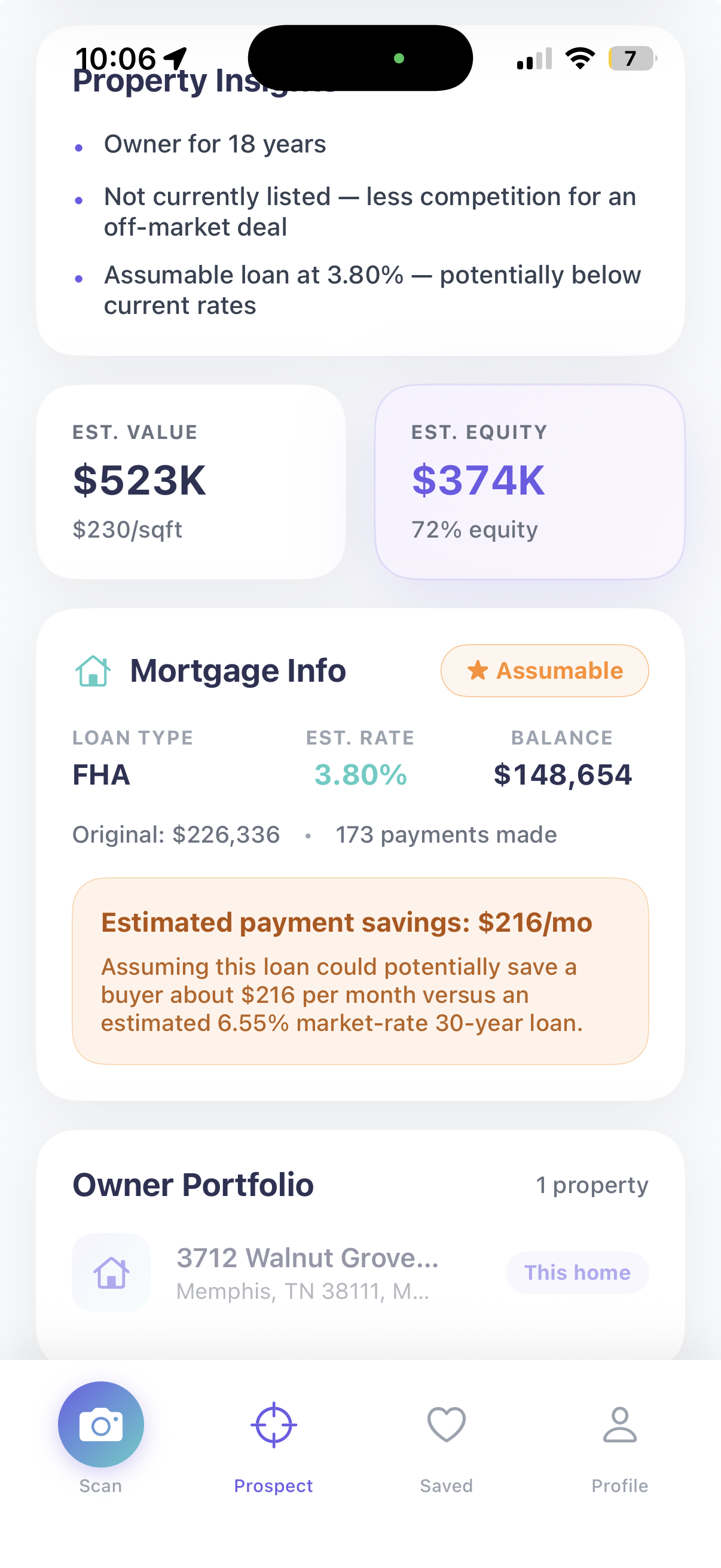
A listing can show off the kitchen, the backyard and the extra bedroom.
An eligible assumable mortgage could give a buyer another reason to look: a different monthly payment.
FHA and VA loans are categories worth investigating. Assumption requirements apply, and the seller’s servicer needs to confirm how the specific loan can be transferred to a qualified buyer.[1][2]
Imagine a home with an eligible $300,000 mortgage at 3.5%, with 25 years remaining. Its principal-and-interest payment would be about $1,502 a month. The same balance and repayment period at a hypothetical 7% would be about $2,120.
That’s roughly $618 a month to talk through.
These are illustrative numbers, not current rate quotes or an advertised loan offer. Taxes, insurance, mortgage insurance, fees and additional financing belong in the full comparison.
For an agent researching an expired listing, the useful question is:
Did buyers ever hear about that potential advantage?
Read the Old Listing Before You Write Your New Pitch
Pull up the previous listing remarks. Review the public marketing you can find.
Was the mortgage mentioned? Was assumable financing explained? Did the marketing give buyers a reason to investigate it?
If you don’t see it, make a note.
Then ask the homeowner what was actually discussed. A missing sentence in the listing doesn’t tell you everything the previous agent did behind the scenes.
You’re looking for a possible opening to help the seller.
The home could have expired for any number of reasons. Price, condition, timing and buyer demand still deserve an honest review. An assumable mortgage gives you another part of the property to evaluate.
A Better Expired-Listing Conversation Starts With Better Research
Here’s how I’d work Labradoor into the process.
1. Start with your expired list and recheck the status. Confirm whether the property has been relisted, sold or is currently represented before approaching the owner.
2. Research the property in Labradoor. Look at the available mortgage information and potentially assumable financing signals. Labradoor surfaces assumable-loan indicators and mortgage and equity information that can help you identify homes worth investigating.[3]
3. Compare that information with the previous marketing. You’re looking for a potentially useful financing feature that wasn’t clearly communicated to buyers.
4. Ask the seller whether assumption was explored. Find out whether they’re still considering a move and whether they’d be willing to investigate this option.
5. Verify the loan before building a campaign around it. With the seller’s involvement, confirm the actual rate, current balance, remaining term, assumption requirements, fees and expected processing time with the servicer. Treat estimated mortgage data as a starting point for research.
Now your call has a purpose.
You’ve looked at the property. You’ve reviewed how it was marketed. And you have something specific to ask about.
What to Say When the Seller Asks, “Why Are You Calling?”
Once you’ve completed that research, try an opener like this:
“I was reviewing how your home was marketed and had a question about the financing. Did you explore whether a qualified buyer could take over your existing mortgage? I didn’t see that option mentioned in the listing, and it could be worth checking before you decide what to do next.”
If your research actually shows potentially assumable financing, you can be more specific:
“The property information I’m reviewing suggests your mortgage may be eligible for assumption. We’d need to confirm that with your servicer, but if it is, it could give us another selling point to explain to buyers. Was that part of your previous marketing?”
Give them room to answer.
Maybe they already explored it. Maybe the terms didn’t work. Maybe this is the first time someone has brought it up.
Their answer tells you where the conversation should go.
The Low Rate Is Only Part of the Story
Before you get excited about relaunching the listing, look at the cash a buyer would need.
If the home sells for $400,000 and the assumable mortgage balance is $300,000, the buyer still needs to cover the $100,000 difference, plus applicable closing costs.
That equity gap can narrow the pool of buyers who could make the purchase work. Any permitted additional financing needs to be evaluated with its payment and costs included.
The seller’s position matters, too. Confirm their release from liability. For a VA loan, also review what happens to their entitlement; an approved assumption and restoration of entitlement are separate issues.[2][4]
Have those conversations before making the mortgage the centerpiece of your marketing.
Give the Seller a Plan They Can Picture
If the loan checks out and the seller wants to move forward, explain what you’d do with that information.
You could highlight verified assumption terms in the listing remarks, create a clear financing explainer and share it with agents whose qualified buyers may be a fit. Include the approval process, estimated cash required and realistic timing.
Make the opportunity easy to understand and easy to investigate.
You still need a sound pricing strategy, good presentation and a home that fits the buyer. The financing can become one more reason for the right buyer to take a closer look.
So before your next expired-listing call, spend a few minutes researching the seller’s mortgage in Labradoor.
You may find a selling point worth bringing to the conversation—and a useful answer when the homeowner asks what you’d do differently.
Sources checked October 1, 2026. Numerical examples are hypothetical and are not current lender quotes.
[2] VA Home Loan Guaranty Buyer’s Guide, loan-assumption section.