

Property Intelligence
What Is Labradoor? See What a House Isn’t Telling You
Snap a photo of any home and Labradoor instantly retrieves hidden property details—then go deeper into ownership, equity, mortgages, seller signals, Prospect and Analyzer.
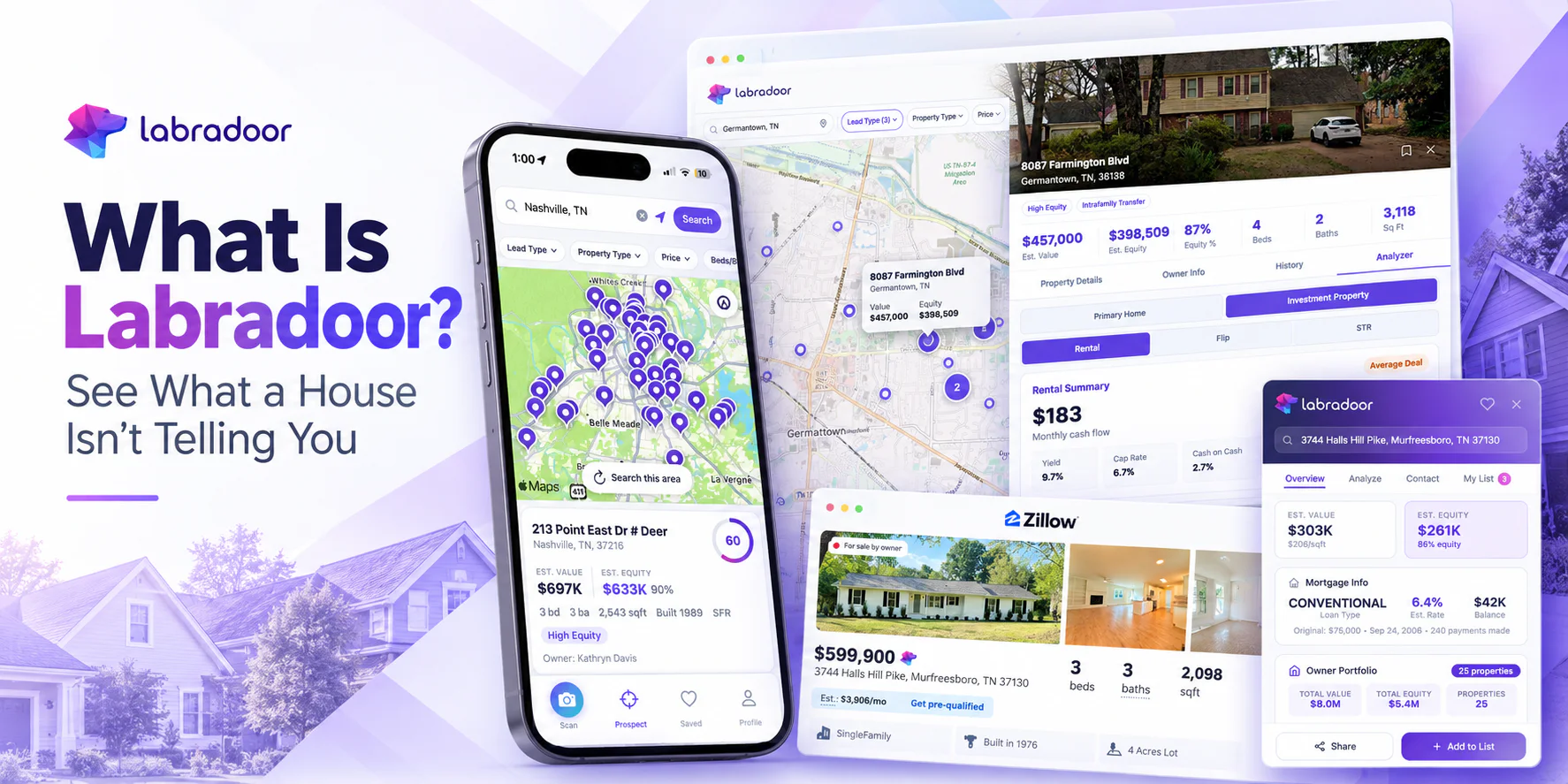
See a home and want to know what is behind it? Snap a photo with Labradoor. The iPhone app identifies the property and instantly retrieves hidden property details—ownership, estimated value and equity, mortgage information when available, seller signals, property history and more.
That camera-first workflow is the heart of Labradoor. You do not have to start with an address or piece together the same property across multiple sites. Point your phone at the house, confirm the property, and move straight into the details that can change how you see it.
From there, you can go deeper: research the owner and portfolio, check mortgage context, evaluate Seller Motivation, run numbers in the Analyzer, discover opportunities in Prospect, or continue the same research on the web and Chrome extension.
Snap a photo. Start with the house in front of you
Property research often starts in the real world. You are walking a neighborhood, touring with a buyer, driving past a property or simply wondering about the house across the street.
Take a photo and Labradoor uses the image plus location and address context to identify the home and pull up its property record. If identification is uncertain, confirm the returned address or search manually. Once the property is identified, the research starts immediately.
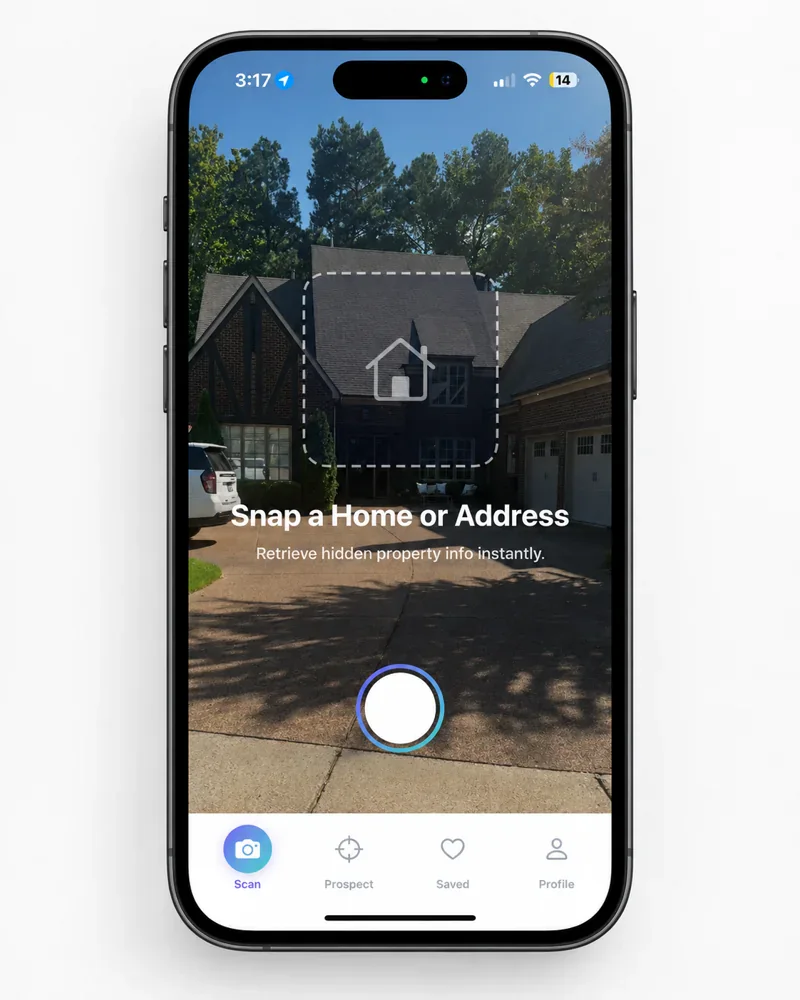
The useful stuff usually sits behind the listing
The visible listing is only one layer. Labradoor adds the ownership and financial context that can change how you look at the property. Depending on the available data, that can include:
- Estimated property value and estimated equity.
- Ownership and property-history context.
- Mortgage balance, loan type and estimated rate information when available.
- Other properties connected to the owner and broader portfolio context.
- Listing, foreclosure, absentee-owner and other seller signals.
- Potential use cases for a buyer, investor or prospecting conversation.
Some of those fields are estimates or signals, not guarantees. That distinction matters. Labradoor is designed to make the next question easier to spot — not pretend the data is more certain than it is.
Seller Motivation Score: a signal, not a crystal ball
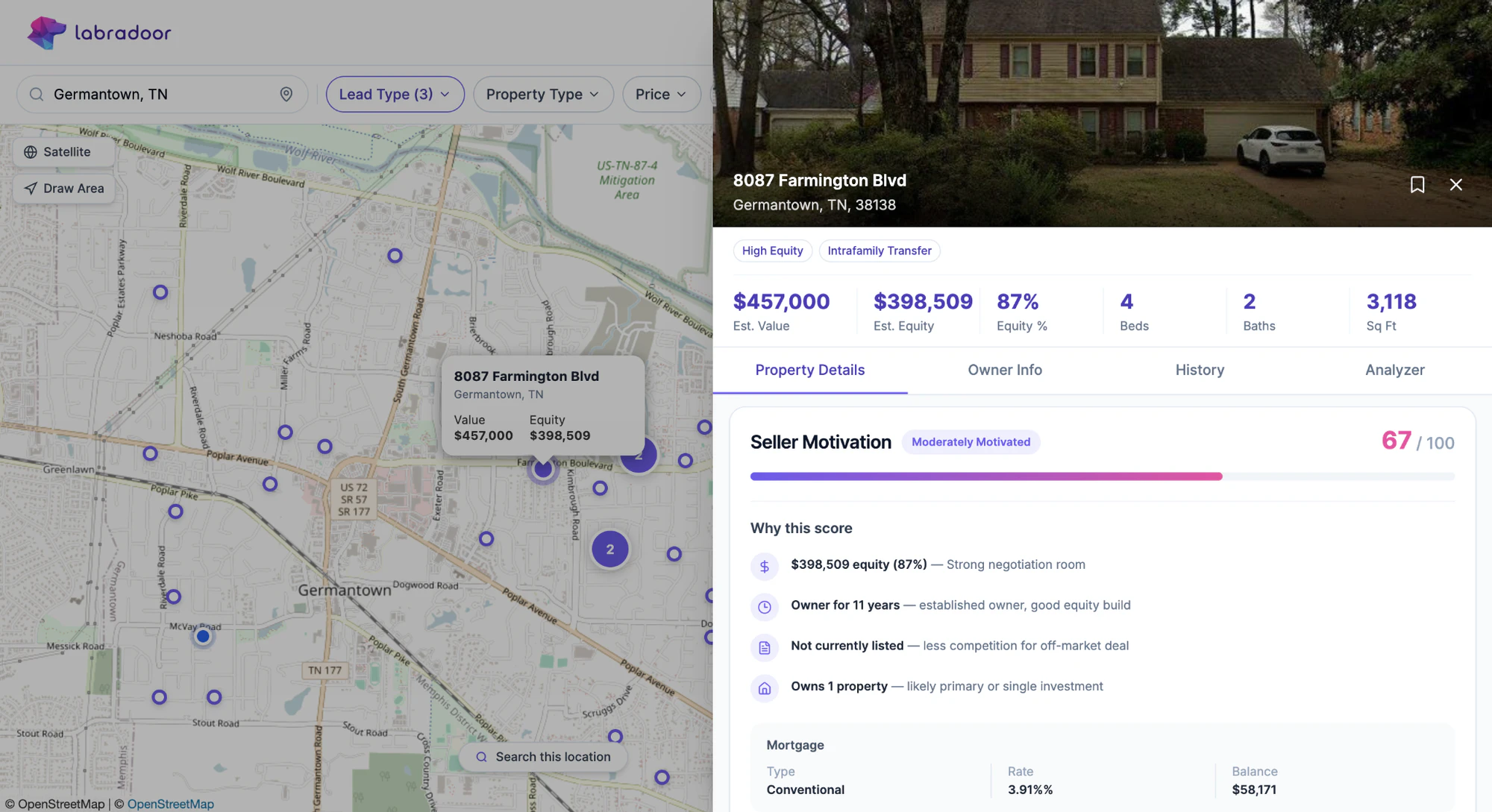
One of the fastest ways to get overwhelmed by property data is to treat every signal equally. Labradoor's Seller Motivation Score is meant to help organize those clues into something easier to evaluate.
A higher score does not mean an owner is definitely going to sell. It means the property is showing a stronger combination of the signals Labradoor tracks. The useful part is not just the score itself; it is being able to look at the factors behind it and decide whether the property deserves a closer look.
Mortgage context can change the conversation
The seller's mortgage can matter almost as much as the asking price. A low recorded or estimated rate may change how an agent thinks about a prospecting conversation, how a buyer evaluates a home or whether a potentially assumable loan is worth investigating.
Labradoor can help surface mortgage context and potential assumable-loan opportunities, but the next step is verification. The current balance may be estimated, the rate may be estimated and assumption eligibility depends on the actual loan, the servicer and the buyer. A buyer also has to account for the seller's equity gap — the difference between the price and the balance being assumed.
That is why we look at the mortgage as a lead, not a promise. We go deeper on that workflow in our guide to checking the seller's mortgage before calling an expired listing.
Prospect turns one-property research into a hunting system
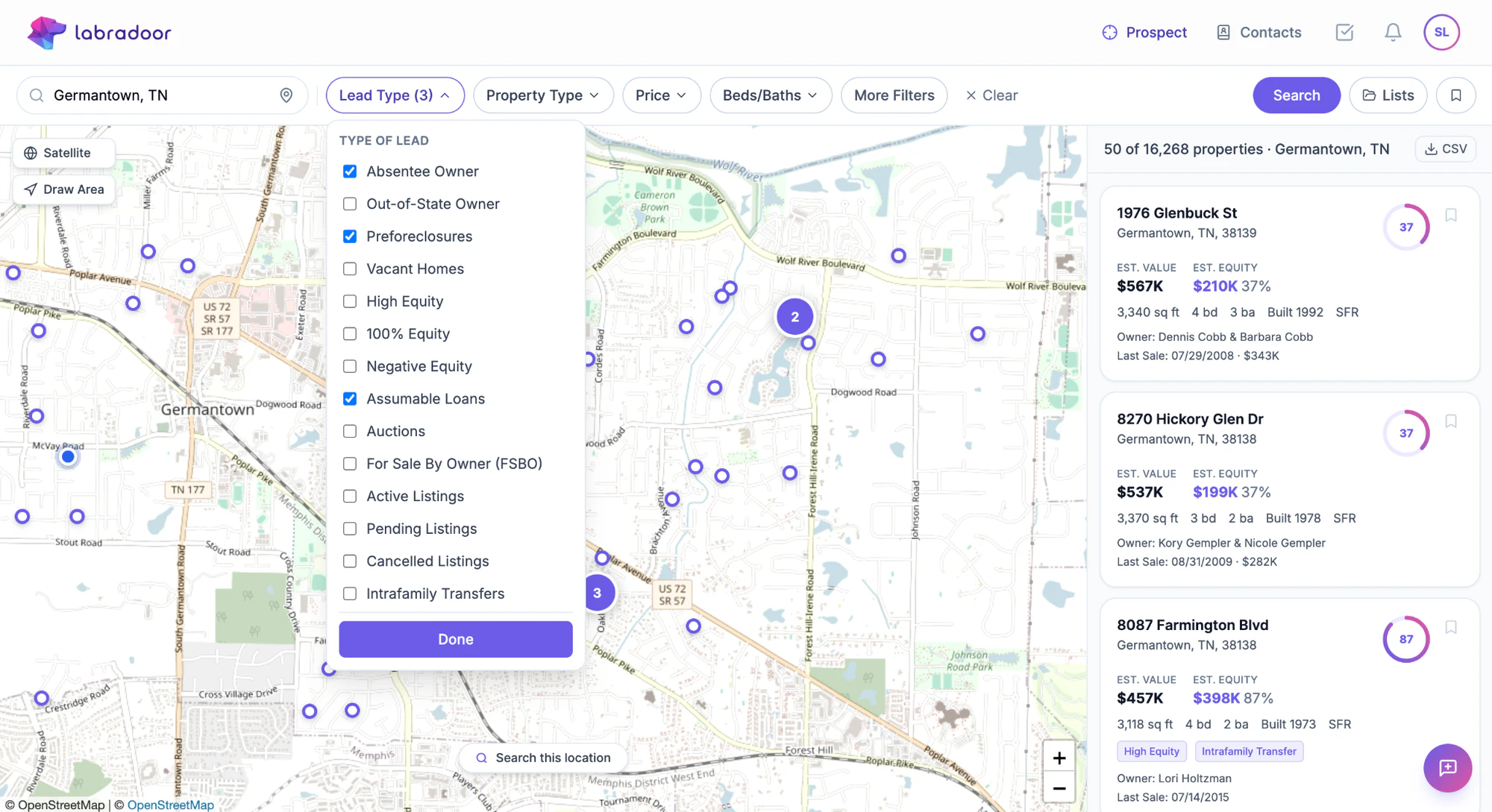
Sometimes you already know the address. Other times the goal is to find the addresses worth looking at in the first place. That is where Prospect comes in.
Instead of searching one property at a time, Prospect lets you work from the characteristics that matter to you. Depending on the market and available records, that can include absentee owners, pre-foreclosures, vacant properties, equity ranges, potentially assumable mortgages, auctions, FSBOs, active and pending listings, cancelled listings and other property or ownership signals.
Bring the context into the browser
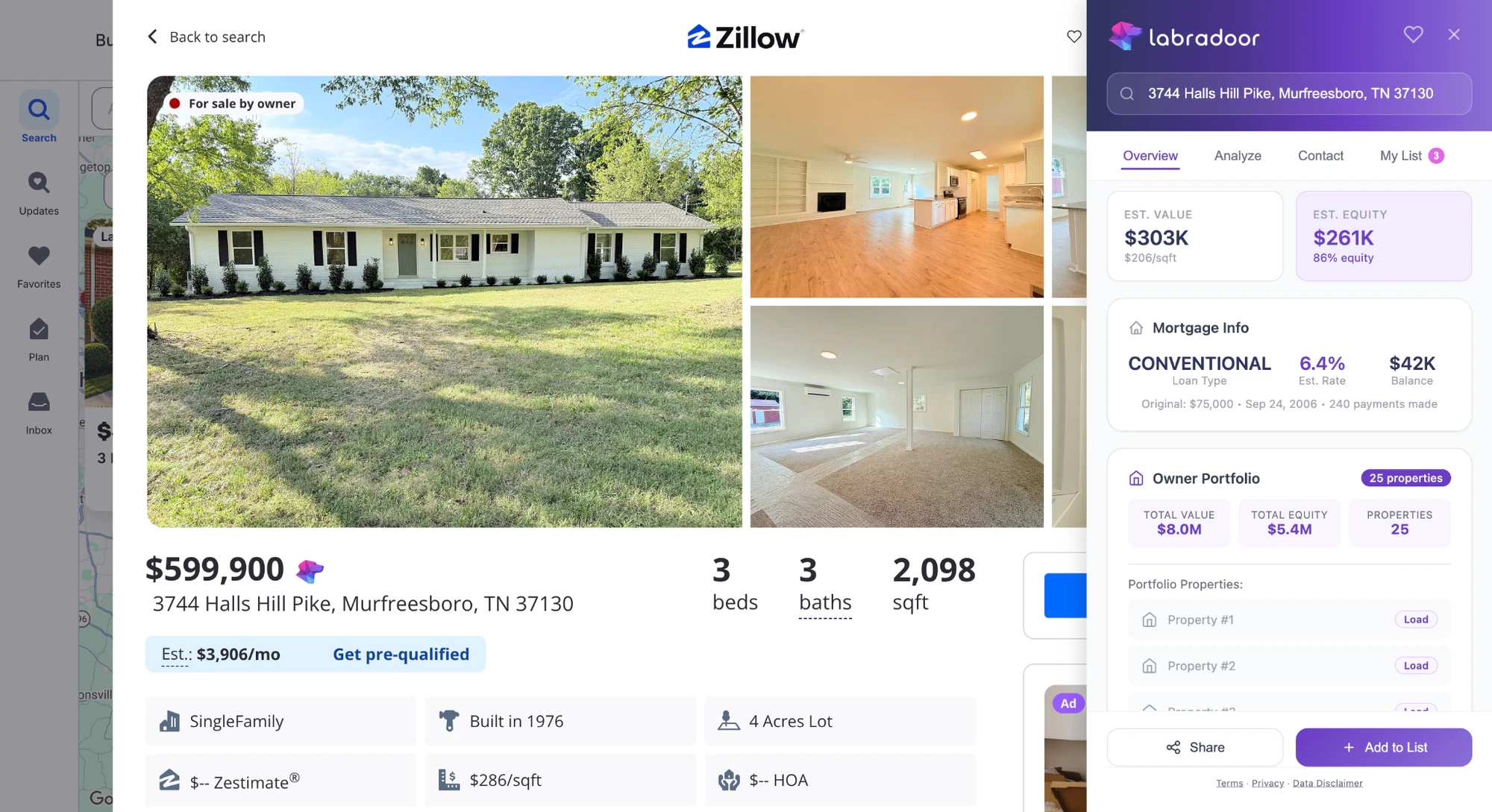
Research should not require you to constantly leave the page you are already using. The Labradoor Chrome extension is built for that exact problem.
When you are looking at a property online, the extension can bring Labradoor's property context into a sidebar so you can review key information without bouncing between tabs. It is especially useful when you are already working through listings and want to add ownership, equity, mortgage or seller-signal context as you go.
Run the numbers instead of eyeballing the deal
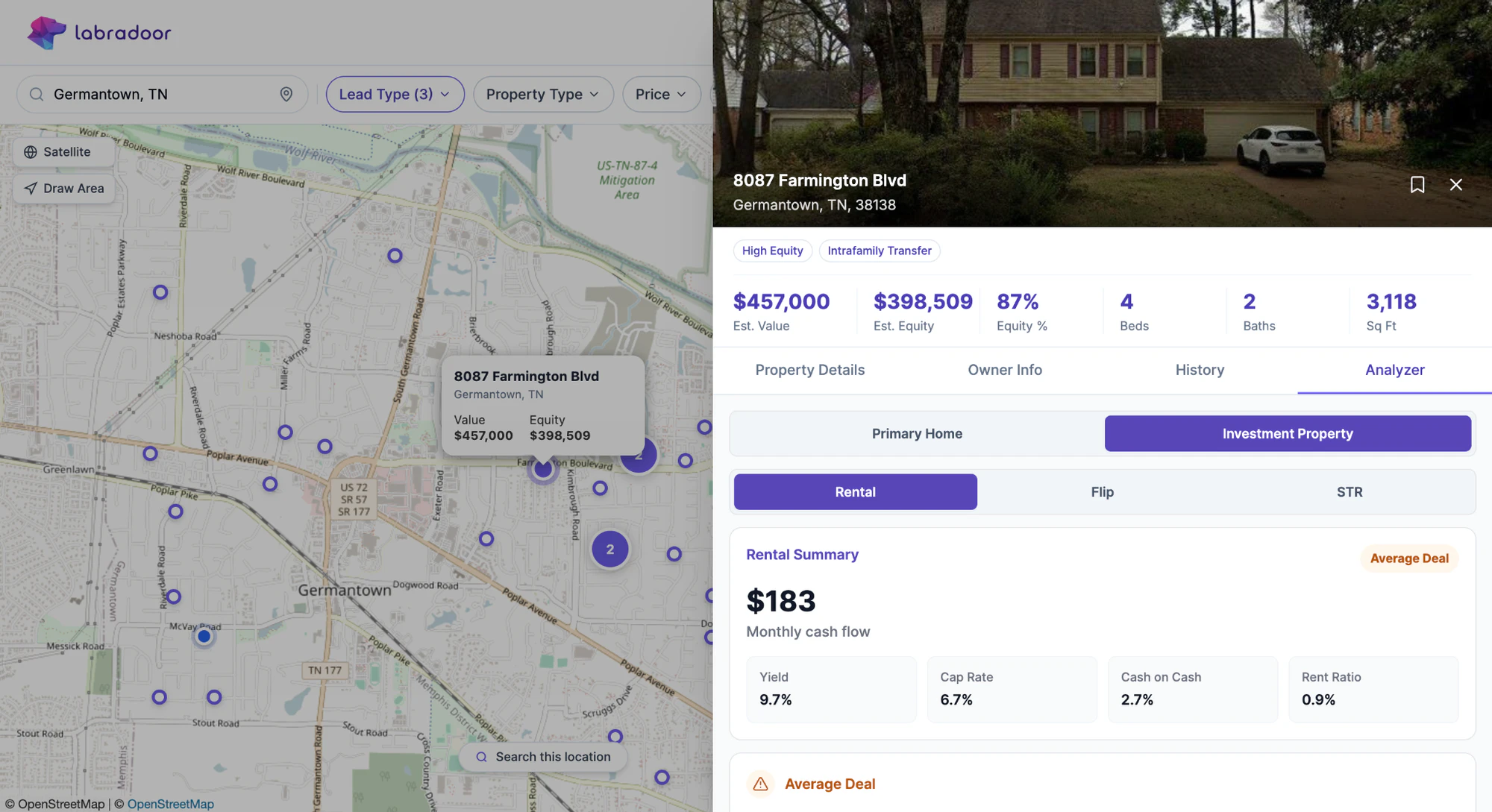
A property can look interesting and still fail the math. The Analyzer is there for the point where curiosity turns into a decision.
You can model different scenarios — including rental, flip, short-term rental and primary-home use cases — so the property is evaluated through the lens that actually matters to you. The goal is not to tell you a deal is good. It is to make the assumptions visible so you can decide whether the numbers hold up.
Contact research is useful. It is not magic.
When the workflow calls for owner outreach, Labradoor can also support contact research and skip tracing. That can save time, but contact data can be missing, old or wrong, and finding a phone number or email address does not automatically mean you have permission to contact someone.
Use the information as a starting point, follow the outreach rules that apply to you and verify important details before acting on them.
One product, three ways to use it
Labradoor is designed around the same property-intelligence layer across three surfaces:
- iPhone for property research when you are out in the field, driving a neighborhood or looking at a home in front of you.
- Web for deeper Prospect searches, filters, contacts and analysis when you want more room to work.
- Chrome extension for adding property context to the listings and websites you are already browsing.
You should not have to relearn the product every time you change devices. The surface changes. The underlying question does not: what is this house telling me once I look past the listing?
Who is Labradoor for?
The answer depends on what you are trying to see.
- Agents can use it to research prospects, understand seller signals and find better conversation angles.
- Investors can move from property discovery into ownership, mortgage and scenario analysis faster.
- Homebuyers can look beyond the asking price and understand more of the financial context behind a home.
- Homeowners can research their own property, equity context and surrounding ownership patterns.
- And yes, curious neighbors can finally answer some of the questions they were going to look up anyway.
The point is not more data. It is a faster decision.
Most property research tools make you start with a search. Labradoor can start with the house itself.
Snap a home. See what others can't.
Explore Labradoor and retrieve hidden property info instantly. If you are evaluating Labradoor for a team or business workflow, see Labradoor Business.
Frequently asked questions
What is Labradoor?
Labradoor is a camera-first property-intelligence platform. Snap a photo of a home to identify the property and retrieve hidden details instantly, then explore ownership, estimated value and equity, mortgage context, seller signals, owner portfolio information, contacts and property scenarios across iPhone, web and Chrome.
What does the Seller Motivation Score mean?
It is a signal-based score that helps organize the property and ownership factors Labradoor tracks. It is not a prediction or guarantee that an owner will sell.
Can Labradoor identify assumable loans?
Labradoor can surface mortgage information and potential assumable-loan opportunities for further research. Actual assumption eligibility, terms, balance and approval must be verified with the seller and loan servicer.
Does Labradoor show exact equity and mortgage balances?
Some value, equity, mortgage balance and rate fields may be estimates. Treat them as research signals and verify important financial details before making a decision.
Can I use Labradoor on more than one device?
Yes. Labradoor is designed across the iPhone app, web platform and Chrome extension so you can use the same property-intelligence workflow in different contexts.